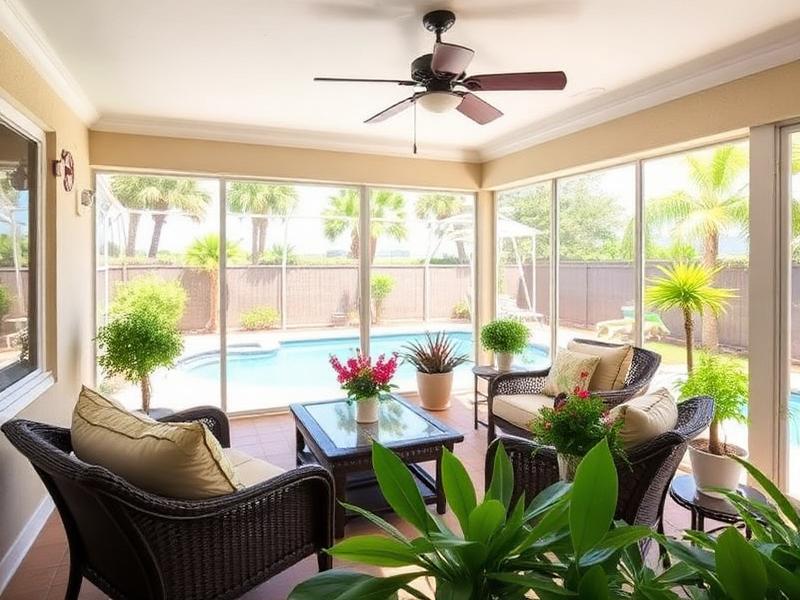
Your lanai or patio enclosure is one of the best features of your Florida home. It keeps bugs, debris, and the occasional surprise visitor out while letting fresh air and sunlight in. But Florida's climate, with strong winds, high humidity, intense sun exposure, and salt air, can quickly wear down screens and structures.
The good news is that consistent, simple maintenance can extend the life of your lanai screens and prevent most common problems. This guide covers monthly cleaning routines, seasonal preparation, DIY repairs for minor damage, professional services, and when to call an expert.
The bottom line: a well-maintained lanai protects your home, keeps pests out, and preserves your outdoor living investment. A neglected one becomes a constant source of repairs and frustration.
Understanding Your Lanai: Types and Terminology
Screen Enclosure
The broad term for any screened-in outdoor space covering patios, porches, decks, and pools.
Pool Cage
A screen enclosure built specifically around a pool to keep out bugs, leaves, and debris.
Lanai
A covered patio or porch attached to the home. It may be screened, enclosed, or open-air.
Understanding these distinctions matters because maintenance priorities differ. A pool cage faces constant moisture and chemical exposure. A lanai attached to your home deals with different airflow and drainage patterns.
Common Problems Florida Homeowners Face
Torn or ripped screens
Strong winds, flying debris, pets, and accidental impacts cause small tears that quickly grow if left unaddressed.
Screen weakening from UV exposure
Over time, the sun breaks down screen fibers. When the black coating wears off and exposes fiberglass yarn, screens can look silvery and become brittle.
Loose screens pulling from the track
Spline, the rubber cord holding screen in the aluminum frame, can deteriorate or lose tension.
Mold, mildew, and algae growth
Florida humidity encourages staining and growth that can break down screen fibers over time.
Rusted screws and corroded aluminum
Salt air accelerates corrosion on fasteners and can compromise structural integrity.
Sagging panels
Screens lose tension from age, heat, or improper installation, which makes them more likely to fail in storms.
Misaligned screen doors
Damaged or misaligned doors prevent proper closure, letting insects and debris into your lanai.
Weak framing connections
Deteriorated anchors where aluminum meets concrete are a serious safety concern during high winds.
Monthly Cleaning Checklist
Florida's climate makes monthly maintenance ideal. Most of these tasks take less than an hour.
- Rinse screens from the inside out with a garden hose to remove dust, pollen, and salt buildup
- Avoid pressure washers, which can stretch, tear, or destroy fiberglass screens
- Clean frames and tracks with a soft brush and mild dish soap
- Pay special attention to bottom door tracks where sand, leaves, and dirt collect
- Walk the perimeter and inspect every panel for tears, loose spline, and sagging
- Check screws, anchors, and frame connections for rust or corrosion
Deep Cleaning: Restoring Your Screens and Frames
DIY Deep Cleaning Method
Use a soft-bristled brush, bucket, mild dish soap, garden hose, gloves, safety goggles, and a soft cloth. Add bleach only when treating mold and mildew.
- Start dry. Use a dry brush to knock loose dirt, cobwebs, and debris off screens before adding water.
- Mix cleaning solution. For general cleaning, use warm water with mild dish soap. For mold and mildew, use 3 parts water to 1 part bleach.
- Scrub gently. Apply solution with a soft-bristled brush or sponge in gentle circles.
- Let solution sit for 5-10 minutes on stubborn stains or mold, but do not let it dry completely.
- Rinse thoroughly with a garden hose from the inside out.
- Wipe frames dry with a soft cloth, especially corners and tracks where moisture lingers.
Consider professional cleaning if your enclosure is large, high, unsafe to access, stained despite DIY efforts, or showing paint chipping and pitting. Professional cleaners use soft-wash systems with low pressure and mild cleaning solutions.
DIY Screen Repair: Fixing Small Tears
Small tears up to about three inches can typically be patched. Addressing minor damage early prevents larger repairs or full rescreening later.
- Repair is appropriate when the tear is smaller than 3 inches, the surrounding screen is flexible, only 1-2 panels are damaged, and the frame is sound
- Replacement is better when multiple panels are failing, screens look silvery, mesh feels brittle, or spline is crumbling or pulling out
- For tiny holes under half an inch, a dab of clear nail polish can seal fibers and slow expansion
- For tears from half an inch to 3 inches, use an adhesive-backed screen patch cut about 1 inch larger than the tear on all sides
- Weatherproof tape or clear packing tape can be used briefly in a pinch, but it is only a temporary fix
- If pets push against screens, consider pet-resistant mesh rather than standard fiberglass
Seasonal Maintenance Guide
Preventing Future Damage
Trim Vegetation Regularly
Maintain 12-18 inches of clearance between plants and your screen enclosure. Palm fronds are especially dangerous during storms.
Control Moisture Around the Enclosure
Make sure downspouts aim away from the enclosure, the ground slopes away from the patio or pool deck, and gutters are clean.
Address Small Problems Immediately
A tiny tear becomes a torn panel after the next storm. Patching small holes early saves money.
Know When Screens Are Failing
Silvery or grey tint, shiny fiberglass threads, holes at seams, or loose spline are signs to plan rescreening.
Professional Services: What to Expect
Call a professional for multiple torn panels, screens older than 7-10 years, structural issues, post-storm damage, or high and hard-to-reach areas.
Screen Material Upgrades
Standard Fiberglass
Best for general use and budget-conscious homeowners. Affordable, good airflow, and easy to repair, but it tears more easily and degrades faster in direct sun.
No-See-Um Screen
Best near water or where tiny biting insects are a problem. The tighter weave blocks gnats and no-see-ums, with slightly reduced airflow.
Pet Screen
Best for homes with dogs or cats that push against screens. It is thicker, more tear-resistant, and more expensive.
Super Screen
Best for high-wind or storm-prone locations. It offers premium durability and a longer lifespan at a higher price point.
Privacy Screen
Best for bottom kick plates and ground-floor panels. It blocks dirt and debris and adds privacy, but it does not allow airflow.
Coastal Considerations
Homes within a mile of the coast face accelerated corrosion on aluminum frames and fasteners. Even rust-resistant aluminum will show oxidation over time in coastal conditions.
Rinse frames with fresh water monthly, choose powder-coated aluminum rather than bare metal, inspect fasteners annually, and consider marine-grade aluminum for new construction or major renovations.
Powder-coated aluminum resists corrosion better than bare aluminum. Anodized aluminum finishes offer a modern metallic look with strong corrosion resistance.
Frequently Asked Questions
How often should lanai screens be repaired or replaced?
Most lanai screens last 7-10 years in Florida. Regular inspections can extend lifespan, but damaged screens should be repaired promptly.
Can small holes in lanai screens be repaired?
Yes. Small holes or tears up to about 3 inches can often be patched using adhesive-backed screen repair patches.
Does lanai screen repair require permits in Florida?
In most cases, basic screen repair does not require permits. Structural modifications or full enclosure replacements may require approval depending on local regulations.
Is professional lanai screen repair worth it?
Professional repair ensures proper tension, secure fastening, and longer-lasting results. DIY repairs are useful for small damage but may be temporary.
How can I prevent my pool cage from turning black?
Black staining is usually mold and mildew. Clean with a mild bleach solution and keep up with monthly rinses and drainage control.
What causes screens to sag?
Sagging comes from age, heat, or improper installation. Significant sagging usually requires full panel replacement or rescreening.
Can I pressure wash my pool cage?
No. Standard pressure washers can tear screens, stretch mesh, dent frames, and strip paint. Use a garden hose or professional soft-wash service.
A well-maintained lanai is easier to clean, more comfortable to use, and far less likely to fail when Florida weather gets loud. Rinse monthly, repair early, and plan upgrades before storm season.